


Displacing Nutrition: The Role of Salmon Aquaculture in Global Inequality
How industrial ocean farming diverts resources from low-income countries and contributes to devastating overfishing at sea
Atlantic salmon, the dominant species used in salmon aquaculture, are piscivorous: They naturally eat other fish. The rapid expansion of the industry from an estimated 33,800 metric tons in 19841 to almost 3 million metric tons in 20242, along with the growth of other types of aquaculture and agriculture, has put tremendous pressure on wild fish populations around the world.
Fish meal and fish oil are essential ingredients in feed formulas used in salmon farming. Today, it is estimated that more than 50% of the 1-2 tillion wild fish caught each year around the world are ground up, rendered, and fed to farmed fish, including salmon3.
In the past it took between two and four kilograms of wild caught fish to produce one kilogram of farmed salmon4, but this ratio has diminished in recent years thanks to improved formulations and new ingredients like insect protein5. The industry says that it now takes a little more than one kilogram of feed to grow one kilogram of salmon6, but studies that measure the total weight of wild-caught fish used, not just the amount that ends up in the feed, have found that it still takes anywhere from 1.8 kilograms to as much as 5.5 kilograms to produce 1 kilogram of salmon, depending on what feed compostion is used7.
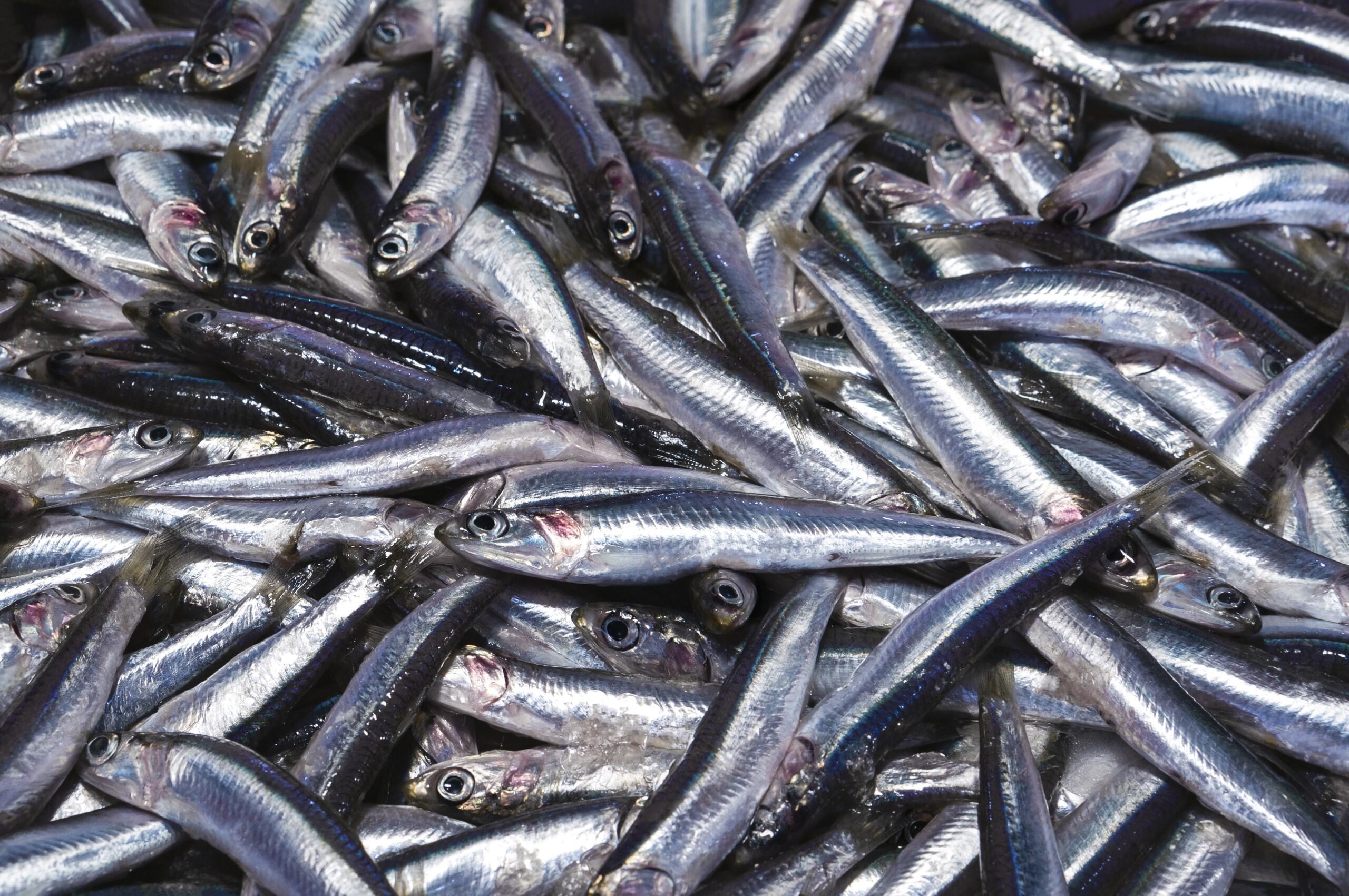
Salmon farming companies have contributed to the growth of forage fish fisheries around the world – species like menhaden, anchovies, mackerel, and sardines – devastating the base of ocean food webs and transferring edible fish from communities in the global south to consumers in places like Europe and North America8,9.
Peru remains the world’s largest producer of fish meal and fish oil, sending one million tons to markets in Canada, the U.S., the U.K., and European Union, among other destinations, every year10. Overfishing, corruption, and intense pollution are features of the industry, which is carried out at such a scale that it negatively affects Pacific Ocean productivity over a vast area.
West African countries like Senegal, Mauritania, and Gambia are also trouble spots. The fish meal and fish oil industry in the region has grown tenfold since 2010 and has direct ties to salmon farming companies11. This rush has led to rampant illegal, unregulated, and unreported fishing and intense coastal pollution near rendering plants, depriving people of food and livelihoods12,13.
In short: Farmed salmon are fed large amounts of fish meal and fish oil, which are made from wild-caught forage fish such as anchovies, sardines and mackerel. These small fish are a vital and affordable source of protein for millions of people in developing countries, where they play a key role in food security.
However, industrial aquaculture diverts these resources to produce salmon for wealthier markets, leaving vulnerable communities facing increased food shortages. This shift strains marine ecosystems and sustains an inequitable food system.

- Folsom, W. B. (1987). World Salmon Aquaculture, 1986–87 [Non-series report]. U.S. National Marine Fisheries Service. https://repository.library.noaa.gov/view/noaa/67277
- Jory, D. 2023 Oct 9. Annual farmed finfish production survey: A modest supply decline for 2023 and a predicted return to growth in 2024. Global Seafood Alliance. https://www.globalseafood.org/advocate/annual-farmed-finfish-production-survey-a-modest-supply-decline-for-2023-and-a-predicted-return-to-growth-in-2024
- Mood, A. and P. Brooke. 2024. Estimating global numbers of fishes caught from the wild annually from 2000 to 2019. Animal Welfare. 33:e6. doi:10.1017/awf.2024.7
- Naylor, RL. et al. 1998. Nature’s subsidies to shrimp and salmon farming. Science, 282(5390): 883–884 https://doi.org/10.1126/science.282.5390.883
- Haug Eide, L. et al. 2024. Black soldier fly larvae (Hermetia illucens) meal is a viable protein source for Atlantic salmon (Salmo salar) during a large-scale controlled field trial under commercial-like conditions. Aquaculture, 579. https://doi.org/10.1016/j.aquaculture.2023.740194
- Moore, G. 2024 Feb 13. Salmon farmers defend responsible use of wild fish in feed. Fish Farming Expert. https://www.fishfarmingexpert.com/compassion-in-world-farming-feed-salmon/salmon-farmers-defend-responsible-use-of-wild-fish-in-feed/1727087
- Roberts, S. et al. 2024. Feeding global aquaculture. Science Advances. 10:eadn9698 https://www.science.org/doi/10.1126/sciadv.adn9698
- Majluf, P. et al. 2017. The little fish that can feed the world. Fish and Fisheries. 18(4): 772-777 https://onlinelibrary.wiley.com/doi/10.1111/faf.12206
- Cashion, T. et al. 2017. Most fish destined for fishmeal production are food-grade fish. Fish and Fisheries. 18(5): 837-844 https://onlinelibrary.wiley.com/doi/10.1111/faf.12209
- Changing Markets Foundation. 2020 Nov 25. What lies beneath: Uncovering the truth about Peru’s colossal fishmeal and fish oil industry. https://changingmarkets.org/what-lies-beneath-uncovering-the-truth-about-perus-colossal-fishmeal-and-fish-oil-industry/
- Changing Markets Foundation & Greenpeace Africa. 2021 Jun. Feeding a monster: How European aquaculture and animal feed industries are stealing food from West African communities. https://changingmarkets.org/report/feeding-a-monster-how-european-aquaculture-and-animal-industries-are-stealing-food-from-west-african-communities/
- The New Yorker. 2021 Mar 1. How fish-meal production is destroying Gambia’s waters [Video]. YouTube. https://www.youtube.com/watch?v=Yipf1nU9Lf
- Wear, B. 2023 Jun 8. How Fishmeal Factories Put Food Out of Reach for Communities in The Gambia. DeSmog. https://www.desmog.com/2023/06/08/how-fishmeal-factories-put-food-out-of-reach-for-communities-in-the-gambia
-

investigate
